
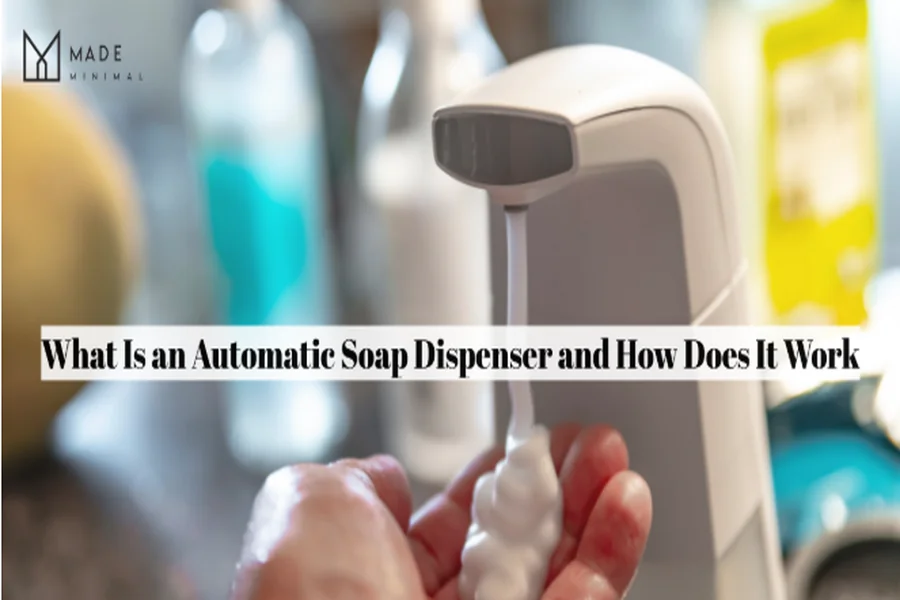
Nobody enjoys cleaning up soap puddles or touching a grimy pump bottle after someone else has used it. An automatic soap dispenser fixes that by releasing soap the second your hand hovers underneath, which keeps things cleaner and more hygienic.
We’ve spent plenty of time testing dispensers like Made Minimal’s Auto Soap Dispenser to see how they hold up. So in this guide, we’ll walk you through how they work, what soap suits them best, and whether the upgrade makes sense for your bathroom or kitchen.
What Is an Automatic Soap Dispenser?
An automatic soap dispenser is a hands-free device that releases soap when it detects your hand underneath. Instead of pressing a pump, you simply hold your palm near the nozzle, and the dispenser does the rest.
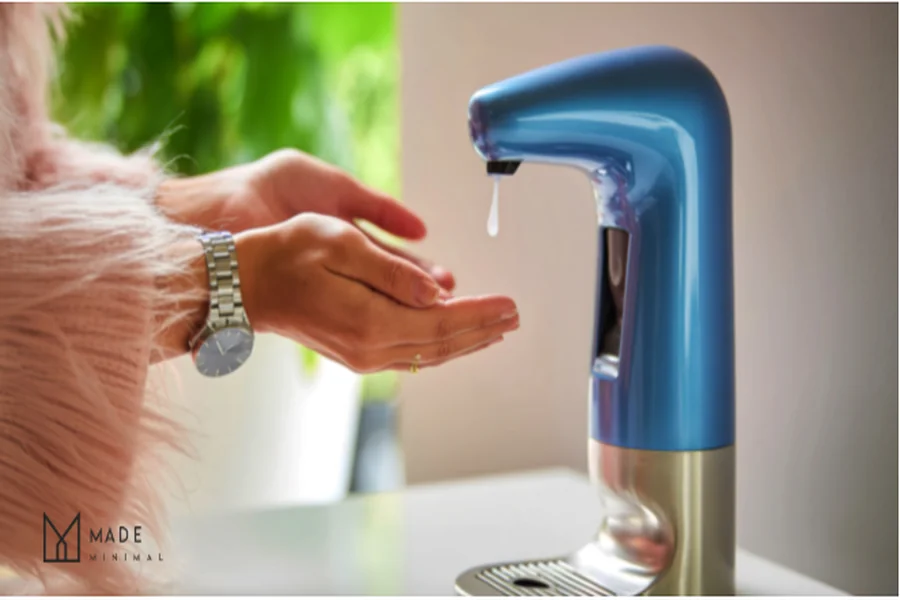
Most models run on batteries or USB charging, which means you can place them anywhere in your home without electrical outlets or hardwiring. This flexibility makes them popular in bathrooms, kitchens, and laundries where soap mess tends to build up.
Since nobody touches the dispenser itself, there’s less chance of spreading germs between family members or guests. If hygiene and convenience are on your radar, an automatic soap dispenser ticks both boxes.
How Does a Touch-Free Soap Dispenser Work?
A touch-free soap dispenser works by using an infrared sensor to detect your hand, which then triggers a small pump to release soap automatically. The process takes less than a second and requires no physical contact at all.
To understand it better, let’s break down the three main parts that make it happen.
The Sensor
Believe it or not, the sensor does most of the heavy lifting. An infrared sensor sits near the nozzle and detects hand movement within a set range, usually around 5 to 7 centimetres.
Once your hand breaks that invisible beam, the sensor sends a signal to the pump (most sensors respond in under half a second).
The Pump Mechanism
From there, a small motor activates the internal pump, which pushes soap out through the nozzle. The amount released is pre-measured, so you get a consistent dispense every single time without any guesswork.
Adjustable Settings
Most automatic soap dispensers also let you tweak the soap volume per dispense. If you prefer a smaller amount for a quick rinse or more for a proper scrub, you can adjust it to suit your needs.
Automatic Soap vs Manual Pump Dispenser
Frankly, the biggest advantage of an automatic soap dispenser is that you never have to touch it. Manual pump dispensers require you to press down every time, and that shared contact can spread germs between family members or guests. An automatic model removes that issue entirely.
Here’s how the two options compare:
| Feature | Automatic Dispenser | Manual Pump |
|---|---|---|
| Hygiene | Hands-free, no germ transfer | Requires touch |
| Soap waste | Controlled, consistent amount | Easy to over-pump |
| Upfront cost | Higher | Lower |
| Long-term value | Fewer refills, lasts longer | More frequent refills |
When you look at daily use, the differences do add up. A manual pump dispenser lets people squeeze out as much soap as they want, which often leads to waste and mess. Automatic dispensers solve this by releasing a set amount each time, keeping your soap usage steady and your bench cleaner.
For households focused on hygiene and convenience, the automatic option makes more sense long term.
Wall-Mounted Soap Dispensers vs Countertop Models
Should you mount your dispenser on the wall or leave it sitting on the bench? Both options work well, but the right choice depends on your space and lifestyle.
Wall-mounted soap dispensers free up bench space, which is a big plus in smaller bathrooms or kitchens where every centimetre counts. They also tend to hold more liquid soap, so you won’t need to refill them as often. After trying both setups in our own space, we found that wall-mounted models work best for high-traffic areas like the main bathroom.
Countertop dispensers, on the other hand, are way more flexible. You can move them between rooms, and they require zero installation. This makes them ideal for renters or anyone who doesn’t want to drill holes in their walls.
So if portability is a priority, a countertop automatic soap dispenser is the way to go.
Best Liquid Soap for Your Automatic Hand Soap Dispenser
Now that you know how these dispensers work, the next step is picking the right soap to go inside. But here’s the thing: not all liquid soap works well in an automatic hand soap dispenser.
The wrong formula can clog your pump and create more hassle than it’s worth. So let’s break it down:
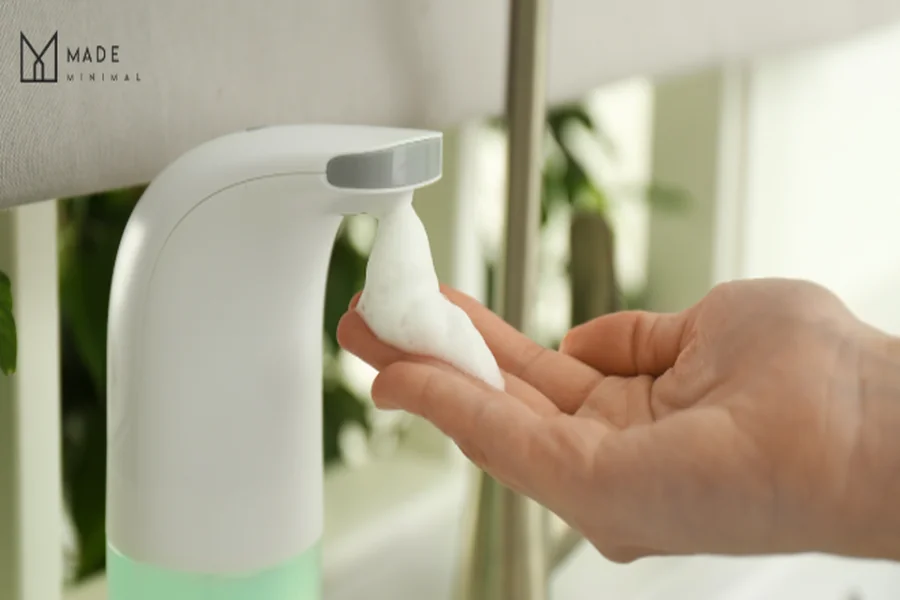
- Foaming Formulas: These work best because they flow smoothly through the pump mechanism. From our experience testing different formulas, foaming soap also tends to leave less residue around the nozzle.
- Avoid Chunky Additives: Soaps with exfoliating beads or thick gels can block the internal tubing over time, which leads to inconsistent dispense or complete pump failure.
- Diluting Regular Soap: If you only have standard liquid soap on hand, you can dilute it with water. Just check your dispenser’s instructions for the recommended ratio to avoid damage.
Choosing the right soap keeps your dispenser running smoothly and even extends its lifespan.
Is a Hand Soap Dispenser Worth the Upgrade?
For most households, yes, an automatic hand soap dispenser is a worthwhile upgrade over traditional pump bottles.
The upfront cost is higher, but you save money over time through less soap waste and fewer refills. You also keep your bathroom or kitchen more hygienic since nobody touches the dispenser itself.
These dispensers work especially well for busy families (especially useful if young kids are in the house) or anyone who values convenience without extra cleaning. Before you buy online, check the returns policy to make sure you can exchange the unit if it doesn’t suit your space.
Once you make the switch, going back to a manual pump will feel like a step backwards.
