
Caviar, the luxurious delicacy made from the salted eggs of sturgeon, has long been a symbol of opulence and refinement. Revered for its delicate flavor, subtle texture, and elegant presentation, caviar has been enjoyed by royalty and connoisseurs for centuries. Yet, as culinary trends evolve, the ways in which this prized delicacy is served have expanded beyond traditional practices. Comparing the classic approaches to contemporary innovations provides insight into the evolving culture of fine dining and the ways chefs and enthusiasts honor caviar today.
The Roots of Traditional Caviar Service
Traditionally, caviar has been served in a manner that emphasizes simplicity and purity, allowing the natural flavor and texture of the roe to shine. The key principles of classic caviar service include careful temperature control, minimalistic accompaniments, and elegant presentation. To truly enjoy it, one must also know how to eat caviar, appreciating the delicate texture and subtle taste without overwhelming it with strong flavors.
Temperature and Serving
Caviar is highly perishable and sensitive to temperature. Traditional service dictates that caviar be served chilled, ideally between 28°F to 32°F (-2°C to 0°C). This is often achieved by placing the caviar tin or jar in a bowl of crushed ice. The cold temperature preserves the delicate eggs and enhances their subtle, buttery taste. Metal utensils are generally avoided, as they can impart a metallic taste; instead, mother-of-pearl, bone, or horn spoons are preferred.
Accompaniments
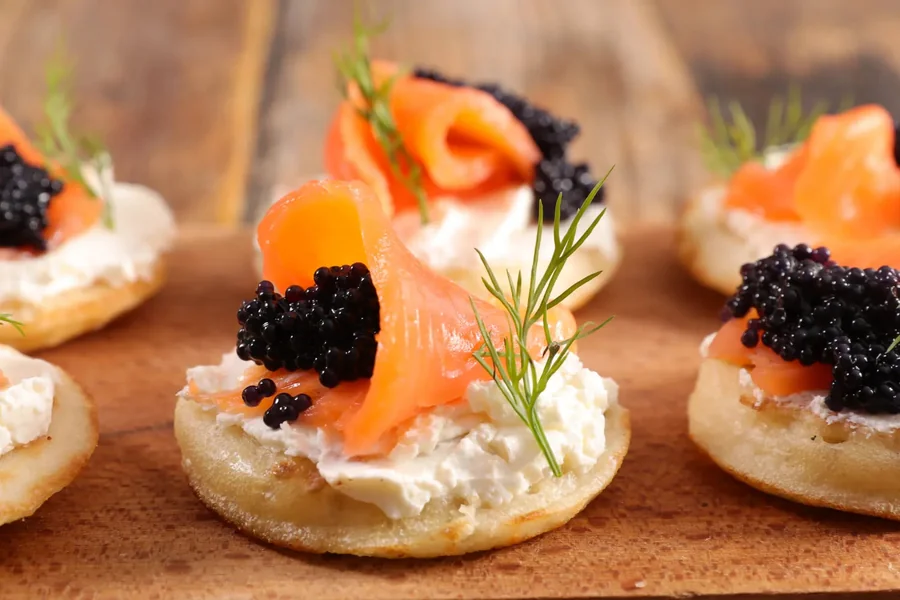
Classic accompaniments are understated. The traditional approach often features lightly toasted blinis (small, fluffy pancakes) or unsalted crackers, along with crème fraîche, a squeeze of lemon, or finely chopped onions. The goal is not to overpower the caviar, but to provide a neutral or mildly complementary base that highlights its flavor. This restraint is what has historically defined the elegance of caviar service.
Presentation
Presentation has always been a key element in traditional caviar serving. Often, caviar is presented in its original tin on a bed of ice, sometimes accompanied by a silver caviar server. The ritual of opening the tin and serving the eggs carefully is almost ceremonial, underscoring the luxury of the experience.
The Modern Approach: Creativity and Experimentation
While traditional service focuses on subtlety and preservation of flavor, modern culinary trends encourage creativity, fusion, and visual appeal. Contemporary chefs are pushing the boundaries of caviar presentation and pairing, incorporating it into innovative dishes that merge tradition with modern gastronomy.
Fusion Cuisine
In modern cuisine, caviar is no longer limited to blinis or simple accompaniments. Chefs are using it as a garnish on sushi, tacos, deviled eggs, and even gourmet burgers. These pairings might seem unconventional, but they emphasize contrast in texture, flavor, and temperature. For example, the salty burst of caviar can complement the richness of a foie gras appetizer or the creaminess of avocado in sushi.
Innovative Pairings
Modern caviar service often experiments with unexpected flavors and ingredients. While classic accompaniments are mild, contemporary chefs pair caviar with ingredients like truffle oil, citrus gels, pickled vegetables, and even smoked meats. The intent is to create a multi-sensory experience where the caviar remains central but interacts with other flavors to create a sophisticated complexity.
Presentation and Technology
Visual impact has become a hallmark of modern caviar service. Chefs now use creative plating techniques, transparent spheres, edible flowers, and even molecular gastronomy techniques to elevate the dish. Caviar may be served atop gel spheres, in tiny pipettes, or as part of a layered amuse-bouche, creating an Instagram-worthy presentation while preserving taste.
Additionally, refrigeration and packaging technology allow caviar to be presented in innovative ways without compromising quality. Modern servers and containers may use advanced chilling systems to maintain optimal temperature while displaying the roe attractively.
Comparing the Two Approaches
The contrast between traditional and modern caviar service lies primarily in philosophy and purpose. Traditional service values preservation, subtlety, and ritual, focusing on the pure experience of the caviar itself. Every detail—from the spoon to the temperature—is designed to honor the delicacy’s natural qualities.
Modern service, by contrast, values creativity, exploration, and sensory impact. It leverages caviar as a versatile ingredient rather than a singular centerpiece, using it to enhance flavors, textures, and visual appeal in inventive ways. While the traditionalist might see a blini topped with caviar and a touch of crème fraîche as the pinnacle of refinement, the modern chef sees endless potential for reinterpretation and fusion. For more culinary inspiration, food trends, and creative dining ideas, visit kierrarush.com.
Health and Sustainability Considerations
Both traditional and modern approaches have also adapted to contemporary concerns about sustainability. True sturgeon caviar is a rare and expensive resource, and overfishing has made it increasingly important to source responsibly. Traditionalists might emphasize heritage brands that adhere to sustainable practices, while modern chefs explore ethically farmed or alternative roe from other fish species. This evolution reflects a shared awareness that luxury dining today must consider environmental responsibility.
Conclusion
Caviar has maintained its status as a culinary icon for centuries, yet the ways it is served continue to evolve. Traditional service honors the delicate flavor and texture of the roe through careful temperature control, simple accompaniments, and elegant presentation. Modern service, on the other hand, celebrates creativity, fusion, and visual impact, integrating caviar into a broader culinary context while maintaining its essential luxury appeal.
Ultimately, neither approach is “better”; rather, each reflects a different philosophy of gastronomy. Traditional service appeals to purists who treasure the ritual and subtlety of fine dining, while modern service attracts those who relish innovation and sensory exploration. Both approaches celebrate the unique qualities of caviar, demonstrating that this ancient delicacy remains as relevant and desirable today as it was centuries ago. Whether enjoyed in a classic Russian palace or as part of a contemporary culinary creation, caviar continues to offer an unparalleled taste of sophistication and indulgence.
